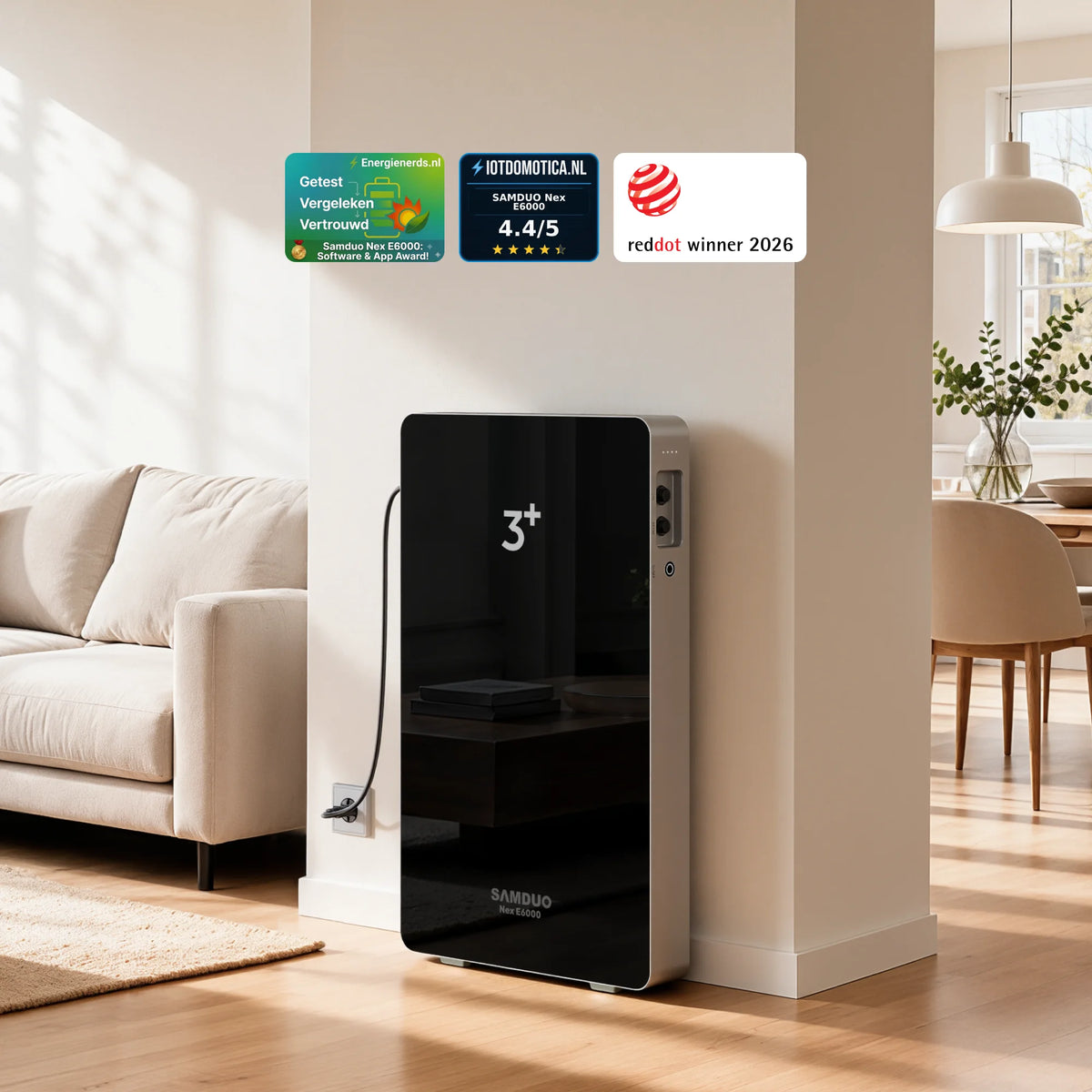
SAMDUO Nex E6000
The short answer is yes, if you meet the relevant conditions.
In 2026, if you purchase and install a SAMDUO Nex E6000 or Nex E6000H and use it to trade electricity, you may be able to receive a full VAT return, according to the conditions set by the Dutch Tax and Customs Administration on VAT return (Belastingdienst btw aangifte).
The net-metering scheme will end on January 1, 2027. This will not automatically end the VAT refund on a home battery, although it may affect how you use your battery. In this guide, we explain who may qualify, how the VAT return process works step by step, and what the end of net metering could mean for you.
How to Qualify for a VAT Return
To successfully claim back your 21% VAT from the Tax and Customs Administration, you must meet the following 5 core conditions:
- You trade electricity. You use the battery to buy and sell electricity through your energy supplier. Your supplier pays you for the electricity you feed into the grid, which means you may be considered an entrepreneur for VAT purposes.
- Your home battery has an EMS. The battery must be equipped with an Energy Management System (EMS) that manages energy trading.
- You have a dynamic energy contract. A dynamic contract allows your battery and EMS to respond to changing electricity prices.
- The documents are of the same name. Both the battery invoice and the energy contract must be in the name of the person applying for the VAT return.
- You are not participating in the KOR. When you purchase and install the battery, you must not participate in the Small Business Scheme (Kleineondernemersregeling, or KOR).
So please check with your energy supplier to ensure that they will compensate you for electricity fed into the grid and allow you to feed electricity back to get a successful VAT refund on a home battery.
Can I Get All the VAT Return Back?
The short answer is yes: you may be able to reclaim all the VAT charged on the purchase if you meet the 5 core conditions, but this does not necessarily mean you will keep the full amount.
If you also use the battery to store electricity for private household use, two tax return obligations may apply:
- VAT on private use: You must pay VAT on the portion of the battery used privately. You calculate this amount using data from your EMS, together with your energy bills where necessary, and report it in the final VAT return of each year during the first five-year period. As a result, the amount can remain relatively modest when private use is limited.
- VAT on energy sales: You must report 21% VAT on the compensation you receive from your energy supplier for electricity fed into the grid.
For example, a battery system costing €7,500 including VAT contains approximately €1,300 in VAT. You may initially be able to reclaim this full amount, but the final benefit will depend on your private use and the compensation you receive for supplying electricity to the grid.
How to File a VAT Return?
The process consists of 4 main steps:
- Register as a VAT entrepreneur. Complete the official Declaration of Starting Business form (Opgaaf startende onderneming: eenmanszaak) and submit it to the Tax and Customs Administration to get a business VAT return. They will get back to you within 10 working days.
- Report your electricity sales. In each quarterly VAT return, report the compensation received from your energy supplier and the 21% VAT due on that amount.
- Calculate VAT on private use. If you also use the battery privately, use your EMS data and, where necessary, your energy bills to calculate the private-use adjustment. Report it in the final VAT return for the year.
- Do it yourself or outsource it. Does that sound too technical? You can complete the process yourself or ask a Dutch tax adviser or specialist VAT-refund service, De Centrale for example, to handle the registration, returns and calculations for you. Before choosing a service, check its fees, what support is included and whether it can work with data from your battery's EMS.
Do I Need to File a VAT Return Every Year?
No, you do not. You only need to deal with quarterly filings during your first calendar year. From the second year, you may be able to simplify the process by joining the Small Businesses Scheme (KOR). Under the KOR, you generally:
- no longer charge or report VAT on the electricity you sell;
- no longer submit regular VAT returns; and
- cannot reclaim VAT on new business expenses.
To keep the total VAT return, your battery purchase should be within the price of approximately €14,000–€15,000, claiming less than €2,500 in VAT. Apply for the KOR online at least 4 weeks before your preferred start date.
Can I Still Get a VAT Return After Net Metering Ends in 2027?
Yes. The Dutch net-metering scheme will end on January 1, 2027, but this will not automatically end the VAT refund on a home battery.
VAT eligibility depends on whether you use your battery to trade electricity, have a suitable EMS and dynamic energy contract, and receive compensation for electricity fed into the grid. These conditions are separate from the net-metering scheme. However, the end of net metering may happen alongside:
- Higher private usage in 2027. Without net metering, storing solar energy for self-consumption becomes significantly more profitable than feeding it back into the grid. While a higher private usage ratio may increase your first-year private-use adjustment slightly, the initial 21% refund remains intact.
- KOR protection. By opting into the KOR in the second year, your regular VAT reporting obligations will generally end.
Complete Your VAT Return on a Home Battery and Don't Worry About 2027
A VAT refund can significantly reduce the upfront cost of a home battery. If you purchase a SAMDUO Nex E6000 or Nex E6000H, use it to trade electricity and meet the other VAT return conditions, you may be able to reclaim it all.
The end of net metering in 2027 will not automatically end VAT eligibility, although it may affect private use and the final financial benefit. Because every household's situation is different, check the latest guidance or consult a tax adviser before submitting your VAT return.
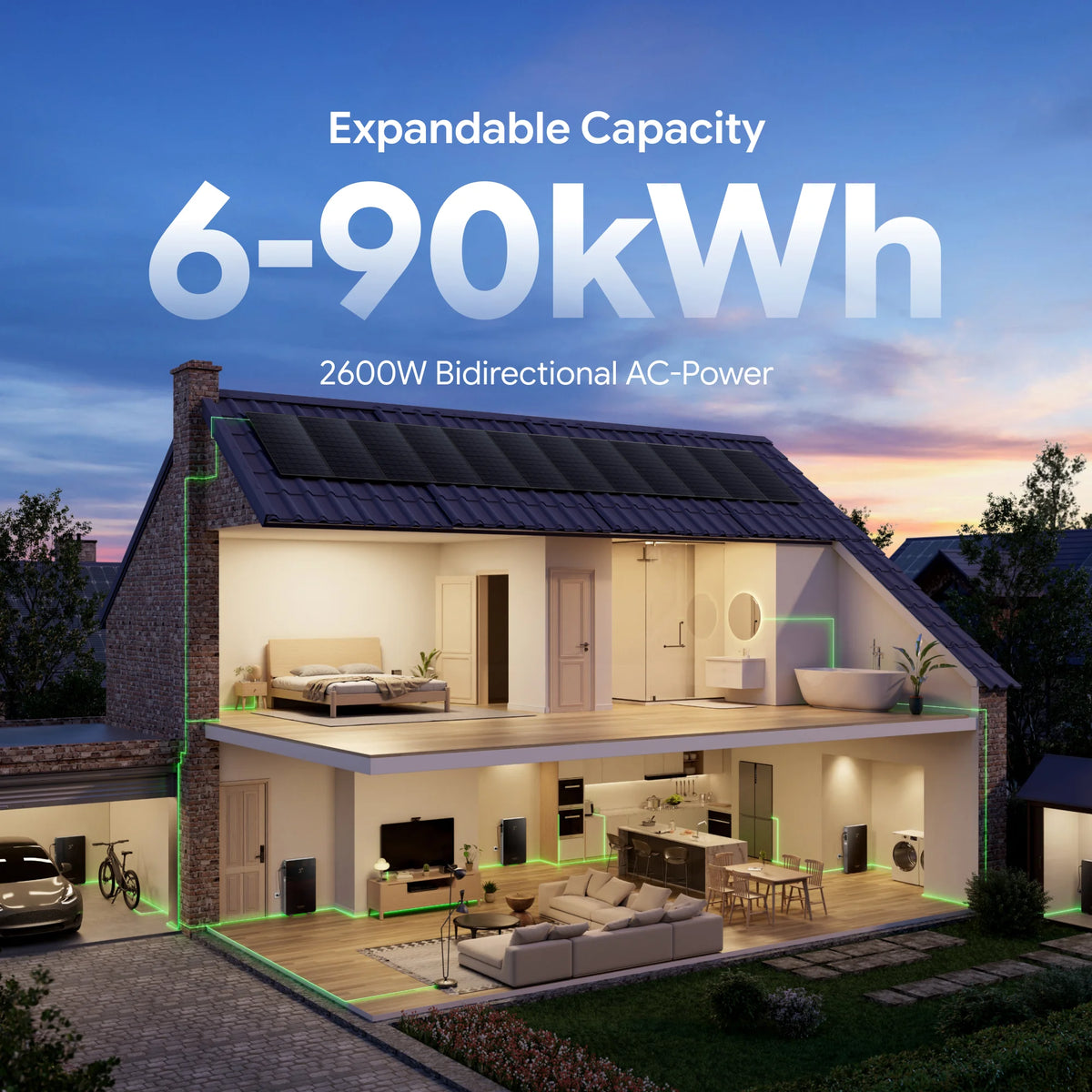
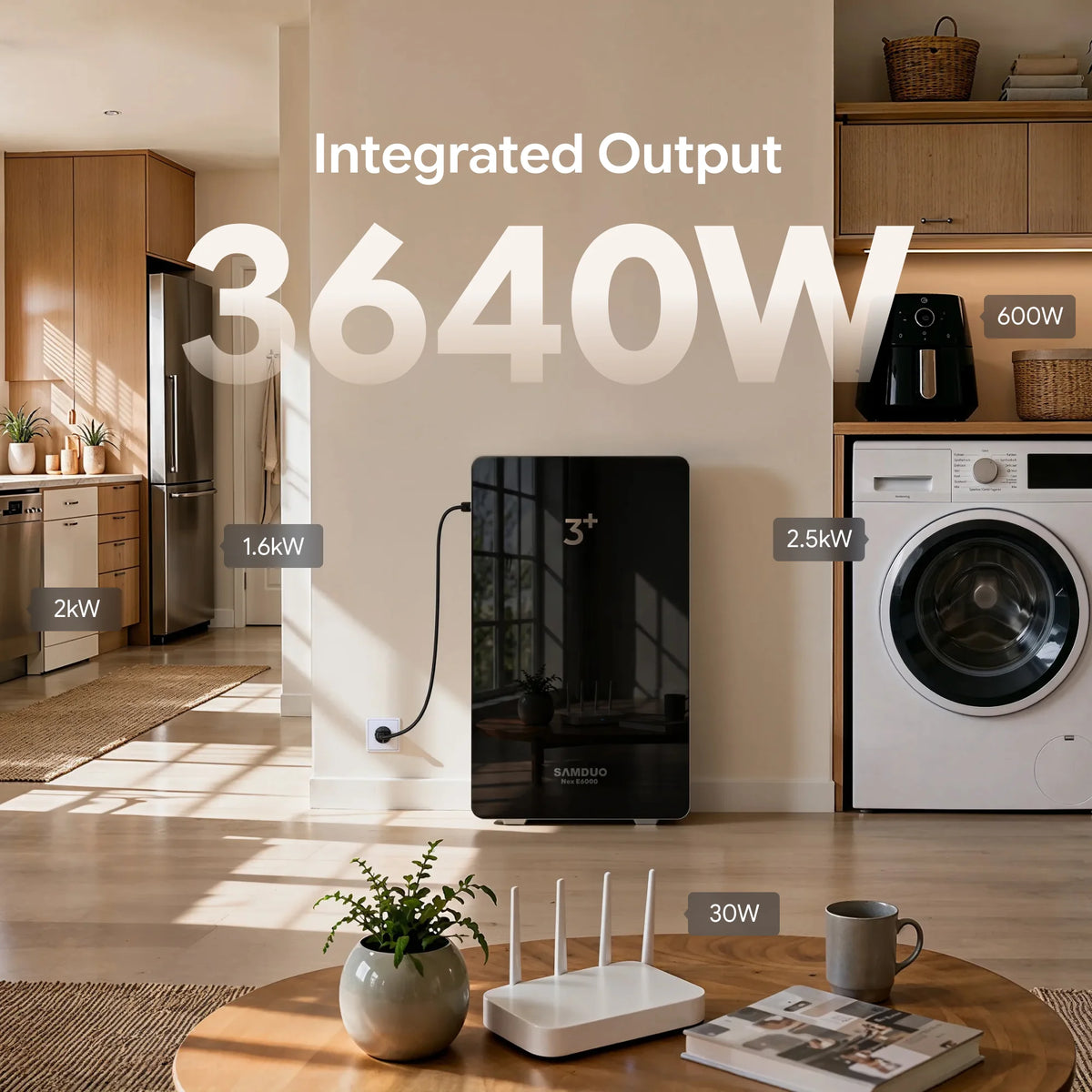
- 2600W Bi-Directional Power with 800W On-Grid Output
- Expandable Capacity from 6–90 kWh
- Plug & play setup for your existing solar system
- Whisper-Quiet Operation at Just 25 dB
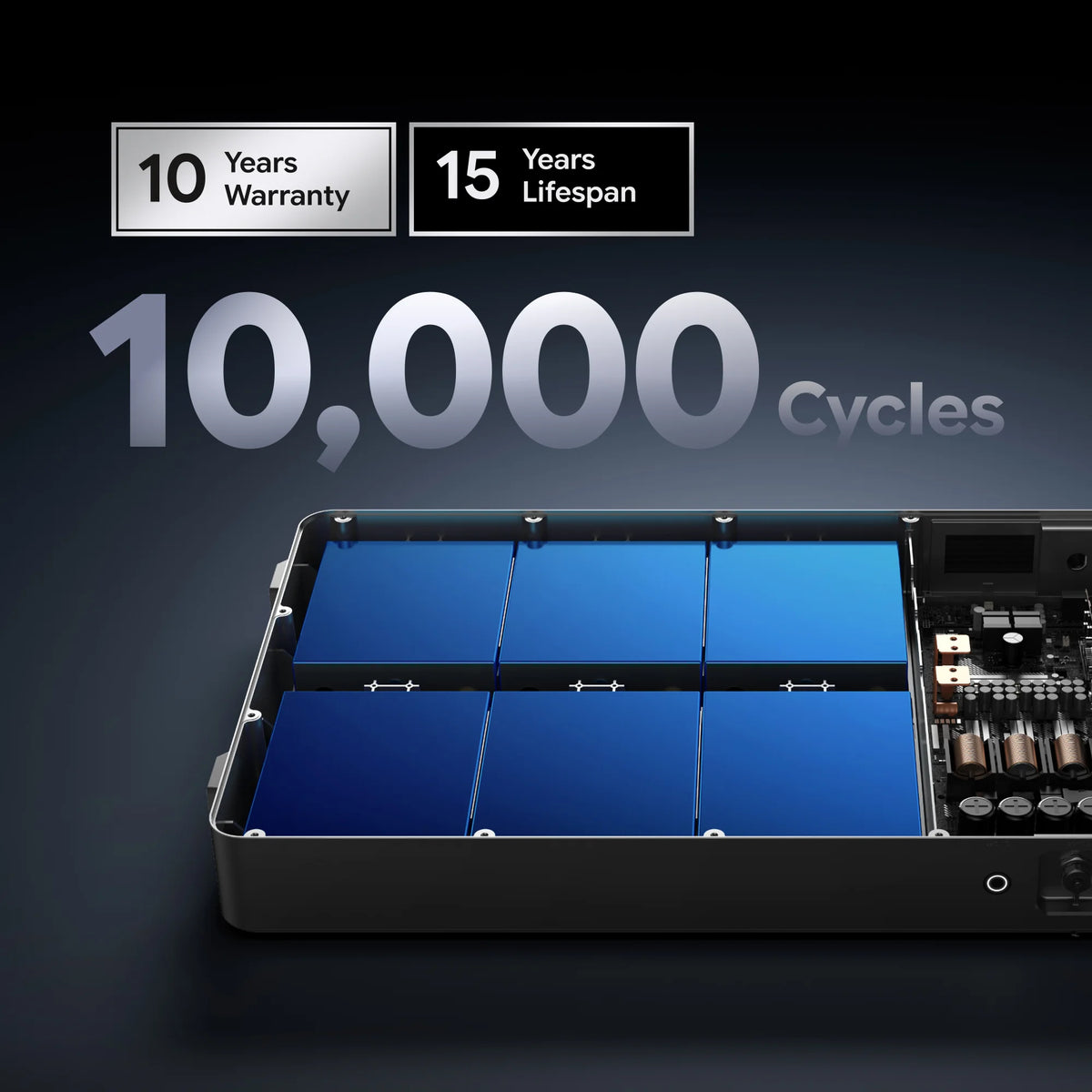
- 10,000 Cycles, 15-Year Lifespan, 10-Year Warranty
Frequently Bought Together




Services & Benefits
Dispatch within 24h
Delivery in 1-5 business days
10-Year Warranty
Privacy by Design
Real-Time Local Support
30-Day Money-Back Guarantee


100% Self-Consumption.
Total Independence.
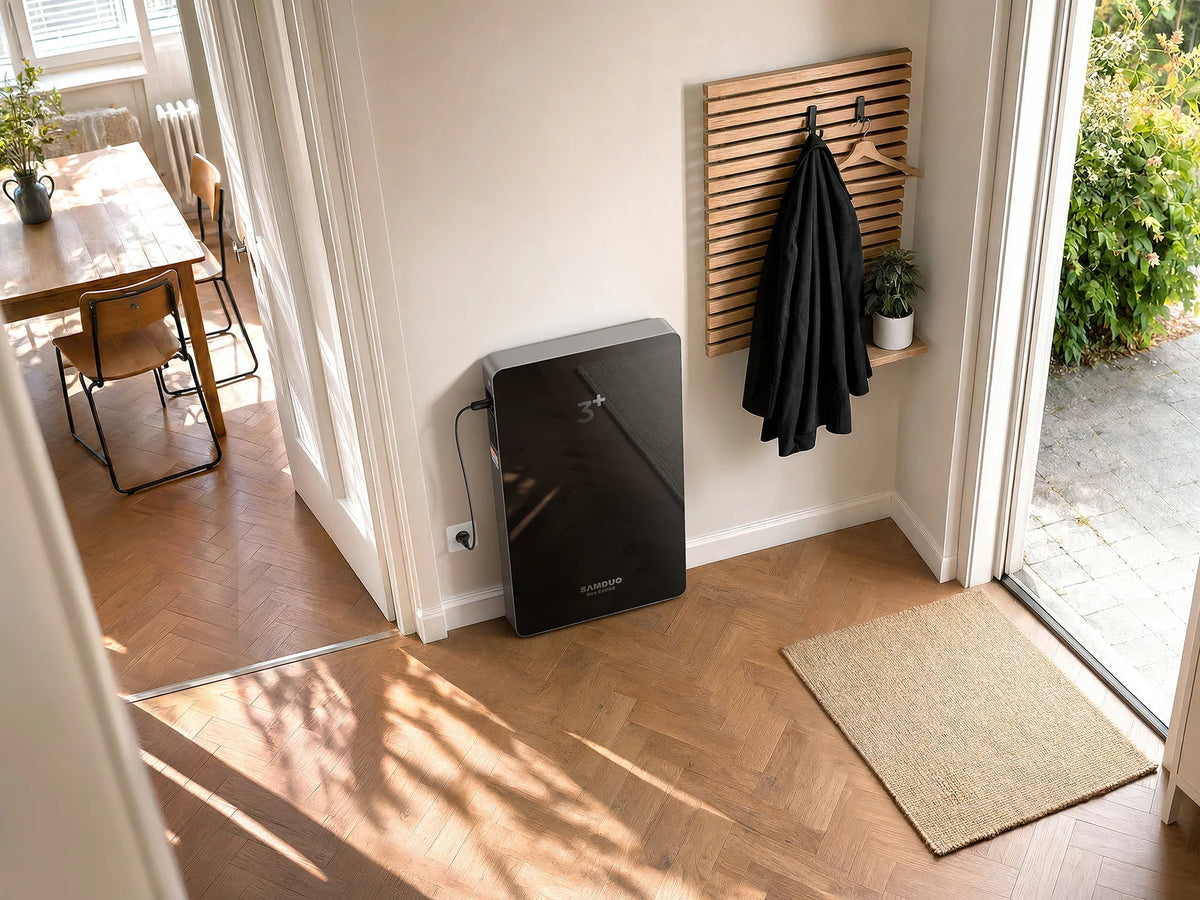

Net Metering Ends in 2027
Only PV systems hit a 30% self-consumption limit. With 4.5 hours of peak daylight, surplus energy is forced back to the grid. As Dutch net-metering ends in 2027, grid feed-in is a losing strategy.


Plug-and-Play.
No Electrician Required.


Effortless Setup, Dutch Home Ready
Skip the wiring, extra hardware, and months of waiting.
Simply plug in and power up.

2600W Pure Output.
Expandable Capacity.


2600W: From Airfryers to Washing Machines,
All Covered.
Support your home's essential loads with rock-solid stability. Release stored solar energy during high-tariff hours to bypass peak rate prices. Every watt, used at the perfect time.

Intelligent Control.
Unified Power.
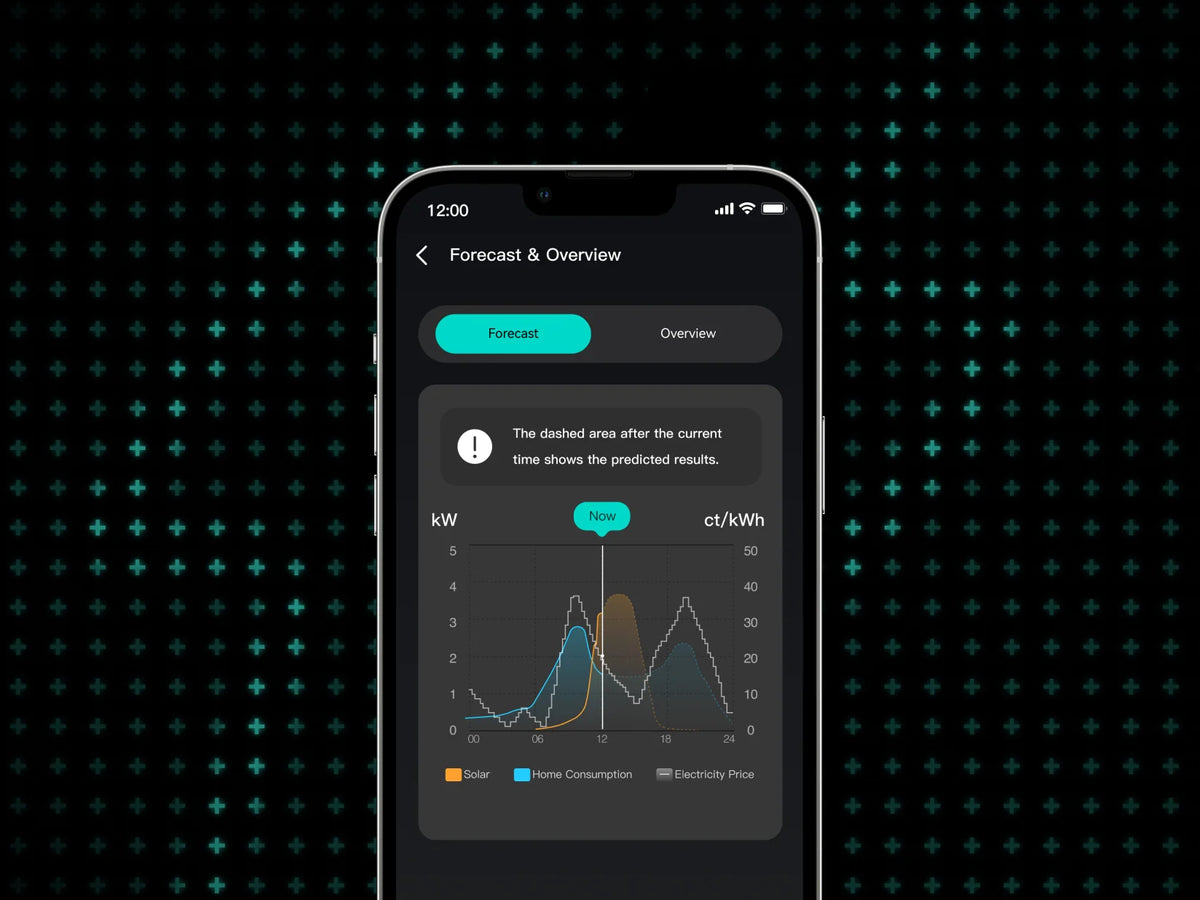

SAMDUO Intelligence: Smart Energy Assistant
An AI-driven architecture that synthesizes dynamic grid pricing, local meteorological forecasts, and household Time-of-Use (TOU) patterns to orchestrate a 24-hour energy roadmap. Maximize your savings by navigating the Dutch dynamic market with a professional-grade strategy.


Seamless Compatibility.
Open API.
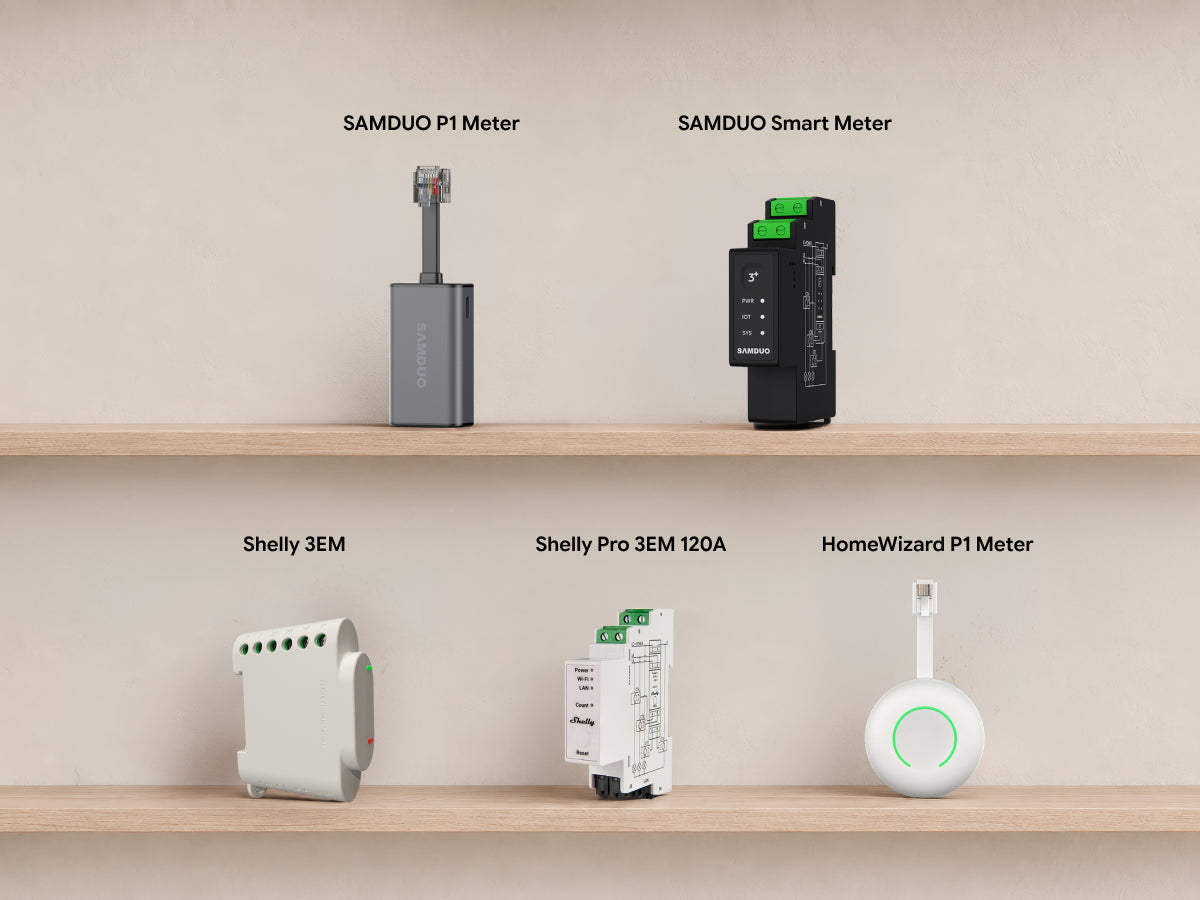

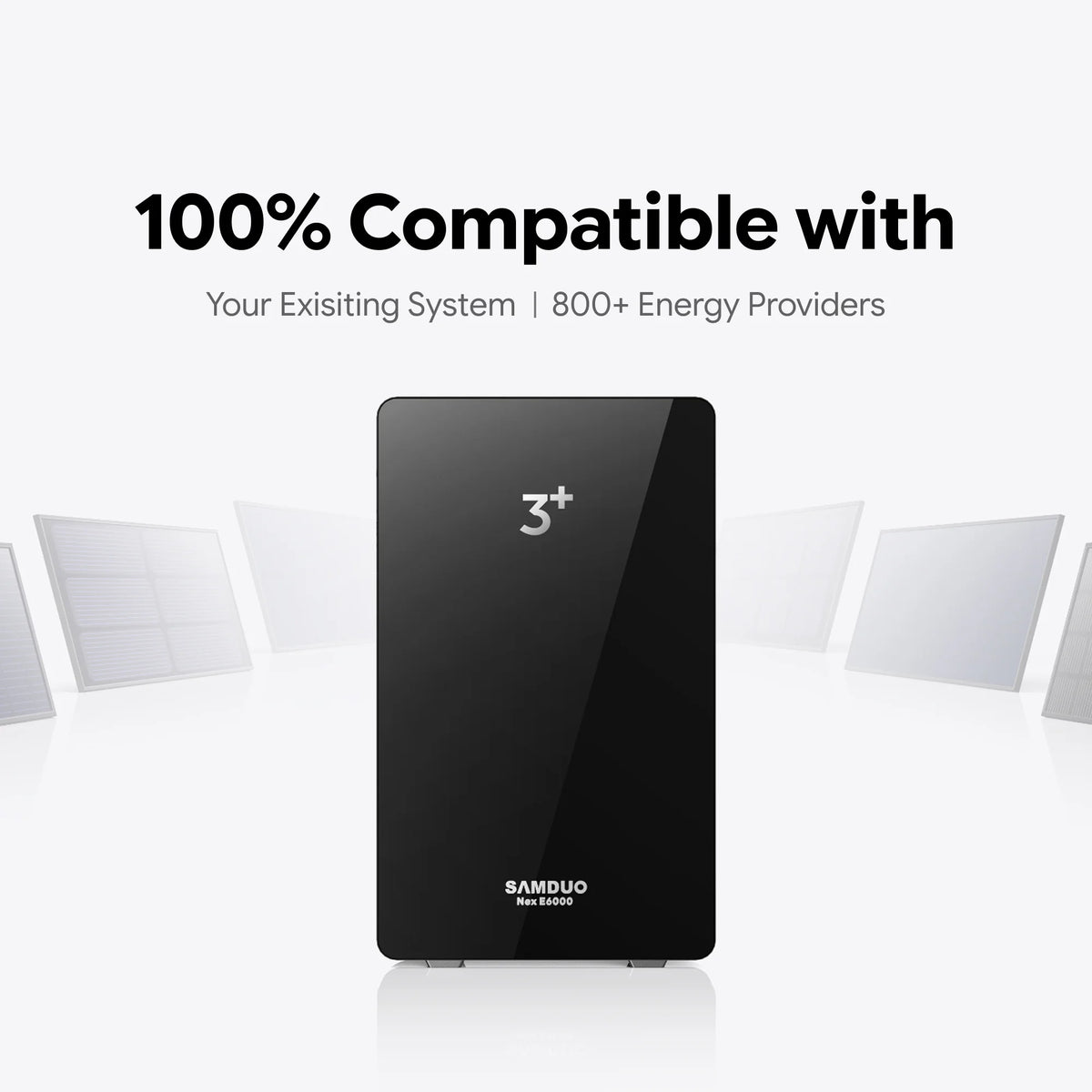
800+ Providers Supported
Whether you're on a dynamic tariff or a traditional fixed rate, the Nex E6000 integrates instantly. Keep your current energy supplier and PV systems. Seamless compatibility, right out of the box.


What's in the Box

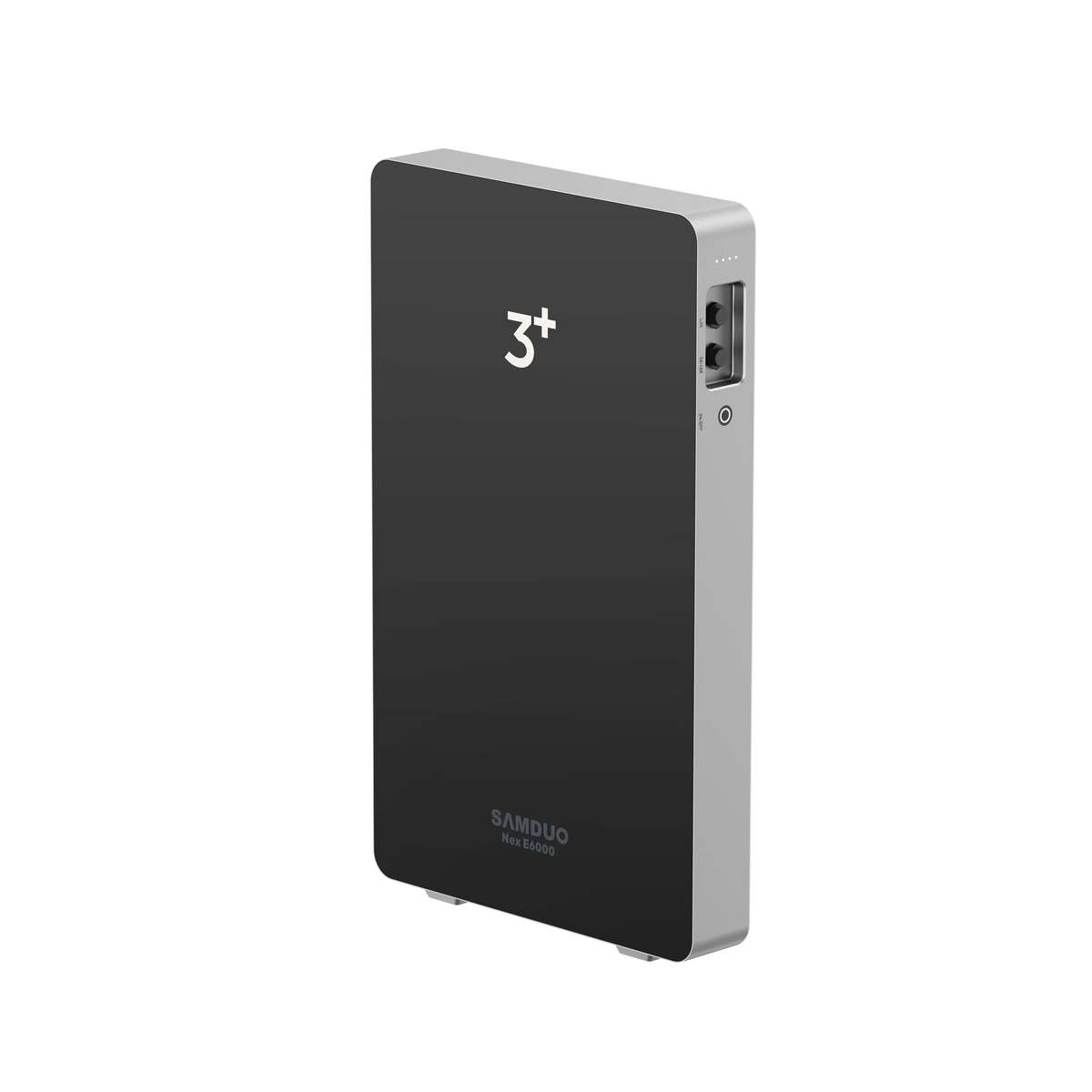
SAMDUO Nex E6000

Mounting Kit

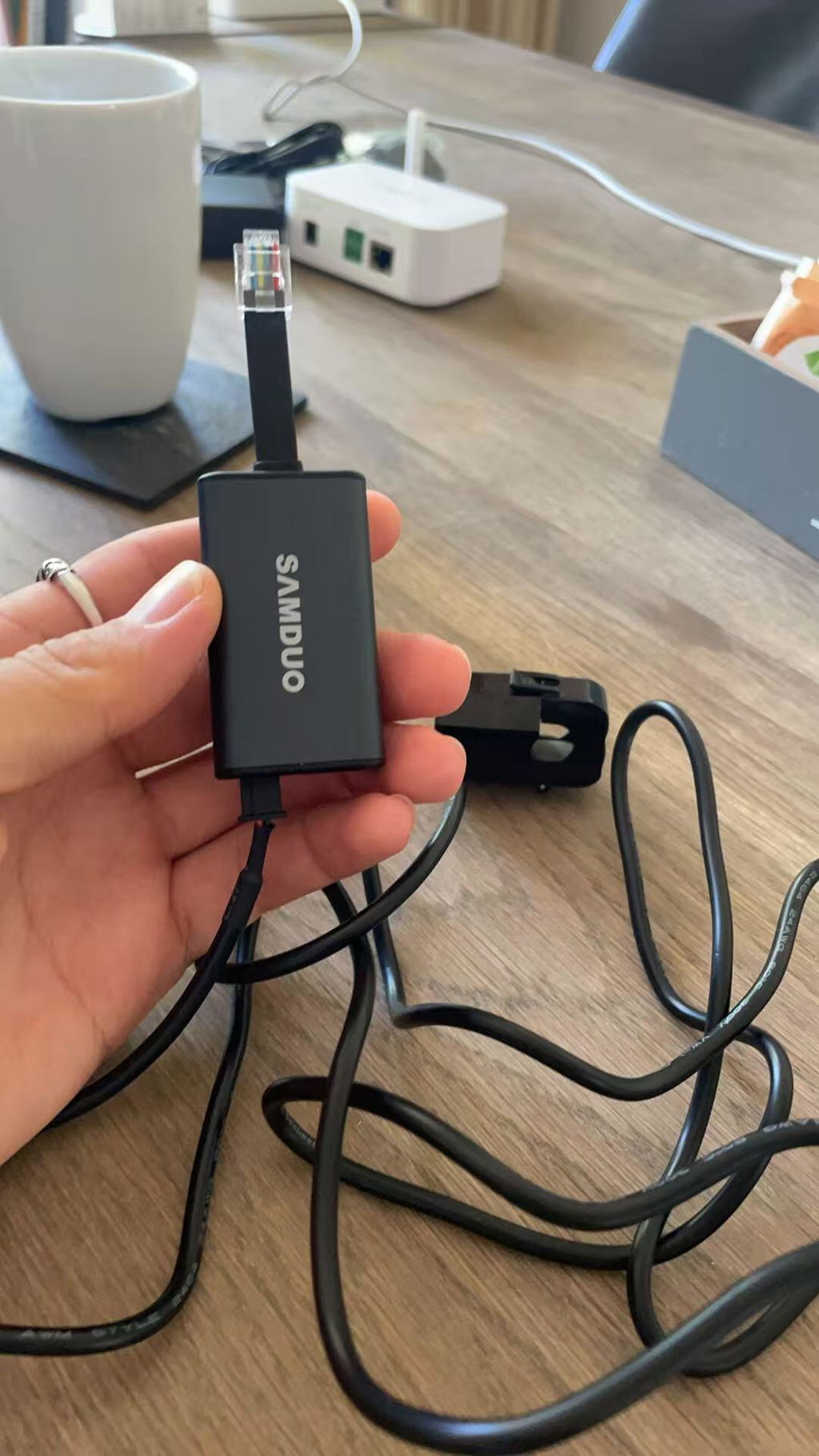
AC Cable with Schuko Plug( 1.5m )

Quick Start Guide

Safety Info

Warranty Card
Product Specifications
FAQs
Q: Can I claim the 21% VAT refund after buying a home battery?
The short answer is yes, if you meet the relevant conditions. To successfully claim back your 21% VAT from the Tax and Customs Administration, you must meet the following 5 core conditions:
- You trade electricity. You use the battery to buy and sell electricity through your energy supplier. Your supplier pays you for the electricity you feed into the grid, which means you may be considered an entrepreneur for VAT purposes.
- Your home battery has an EMS. The battery must be equipped with an Energy Management System (EMS) that manages energy trading.
- You have a dynamic energy contract. A dynamic contract allows your battery and EMS to respond to changing electricity prices.
- The documents are of the same name. Both the battery invoice and the energy contract must be in the name of the person applying for the VAT return.
- You are not participating in the KOR. When you purchase and install the battery, you must not participate in the Small Business Scheme (Kleineondernemersregeling, or KOR).
So please check with your energy supplier to ensure that they will compensate you for electricity fed into the grid and allow you to feed electricity back to get a successful VAT refund on a home battery.
Q: Can the Nex E6000 be installed anywhere other than on the floor?
Wall mounting is supported for the Nex E6000 model.The following requirements must be met:
- The wall should be structurally sound, such as concrete or brick.
- The wall must be capable of supporting the system's weight.
- Adequate ventilation space must be maintained around the unit.
- Local fire safety requirements should be observed.
NOTE: The Nex E6000H is designed for horizontal floor installation and is not intended for wall mounting. Always follow the installation instructions provided in the user manual.
Q: How does DuoShield™ help protect my home and energy system?
DuoShield™ is SAMDUO's multi-layer protection framework designed to keep your home energy system operating safely and reliably. It combines a high-precision Battery Management System (BMS) with an intelligent Energy Management System (EMS) to continuously monitor battery performance and system status.By helping prevent overcurrent, thermal surges, and voltage fluctuations while providing real-time fault detection and notifications, DuoShield™ delivers an extra layer of protection and peace of mind for everyday use.
Q: Can the Nex E6000 help lower my electricity bills?
Yes of course. The Nex E6000 stores excess solar energy or low-cost grid electricity and makes it available when energy prices are higher. By increasing self-consumption and reducing reliance on grid electricity, it can help lower your overall energy costs throughout the year.
Q: What are the benefits of PowerMesh™ for homeowners?
PowerMesh™, gives homeowners the flexibility to expand their energy storage system over time. By connecting multiple compatible units(e.g., SAMDUO E6000H, SAMDUO P2800 Pro), you can increase available backup power, extend runtime during outages, and support growing household energy demands.Instead of replacing your system in the future, you can simply add more capacity when needed, making PowerMesh a smarter and more cost-effective long-term energy solution.
Q: Will the Nex E6000 create noticeable noise in my home?
With a sound level below 25 dB, the Nex E6000 operates more quietly than many common household appliances, making it suitable for living areas, utility rooms, garages, and other residential spaces.
Q: Can the Nex E6000 take advantage of off-peak electricity rates?
Yes of course. The system can charge when electricity prices are lower and use stored energy when prices rise, helping homeowners maximize savings and get more value from dynamic energy tariffs.
Q: What warranty coverage comes with the Nex E6000?
The Nex E6000 is backed by a 10-year limited warranty, providing long-term protection and peace of mind for your investment. Designed for reliable daily energy storage and long service life, the system is built to deliver dependable performance for years to come.The warranty period begins on the date of product activation. Proof of purchase is required to validate warranty eligibility.
Recommendations

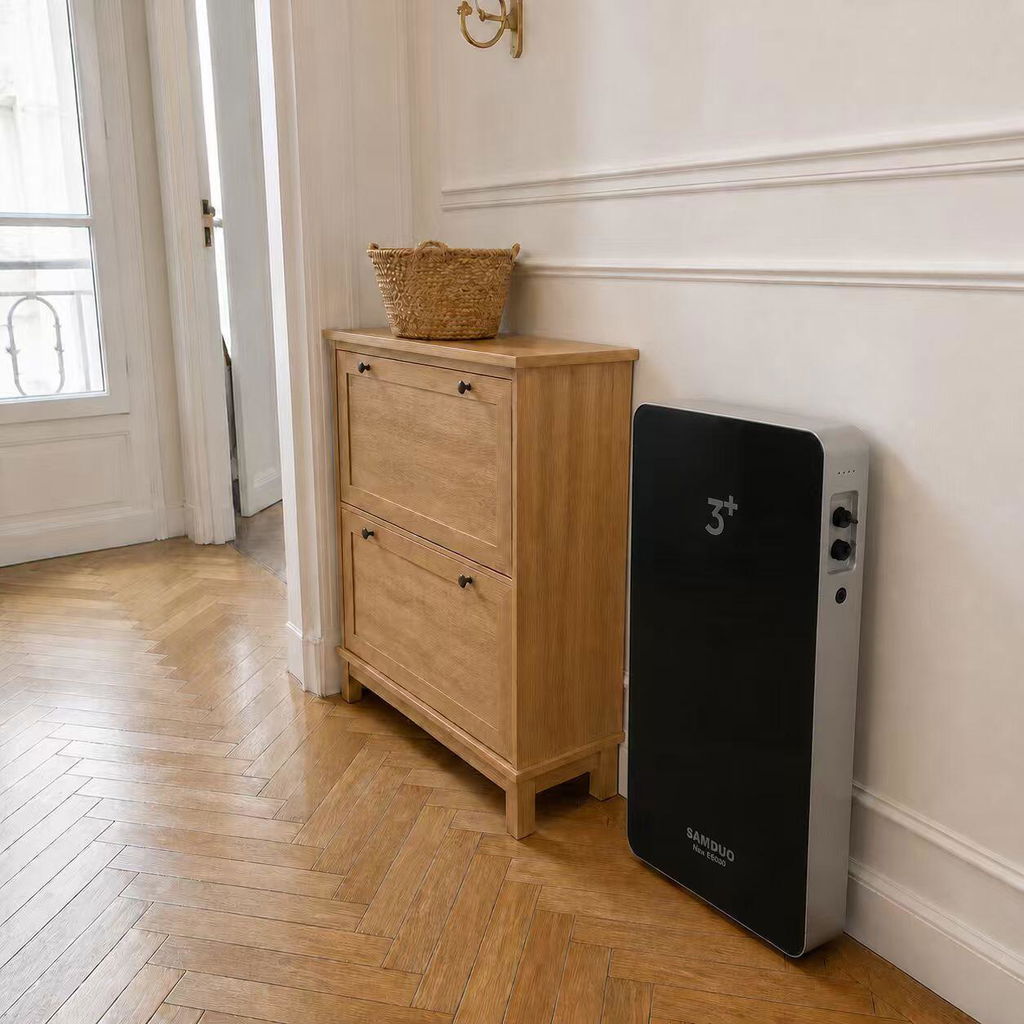
Notre buanderie n’est pas très grande, donc le format fin du Nex E6000 était important pour nous. Il reste discret contre le mur et ne gêne pas le passage. La journée, nous stockons une partie de l’énergie produite par nos panneaux, puis nous l’utilisons le soir lorsque tout le monde est à la maison. C’est simple au quotidien et nous profitons mieux de notre production solaire.

Overdag zijn we meestal aan het werk, precies wanneer onze balkonpanelen de meeste stroom opwekken. Voorheen leverden we die stroom vooral terug en gebruikten we ’s avonds weer stroom van het net. Nu bewaren we een deel voor na het werk. Met ons dynamische contract laden we bij op goedkope momenten, zodat we tijdens de duurdere avonduren minder stroom hoeven in te kopen.


Très pratique à la maison. Le E6000 se place facilement contre un mur sans prendre beaucoup de place, et son design s’intègre bien avec les meubles. Il reste discret au quotidien, ce qui est exactement ce qu’on cherchait.
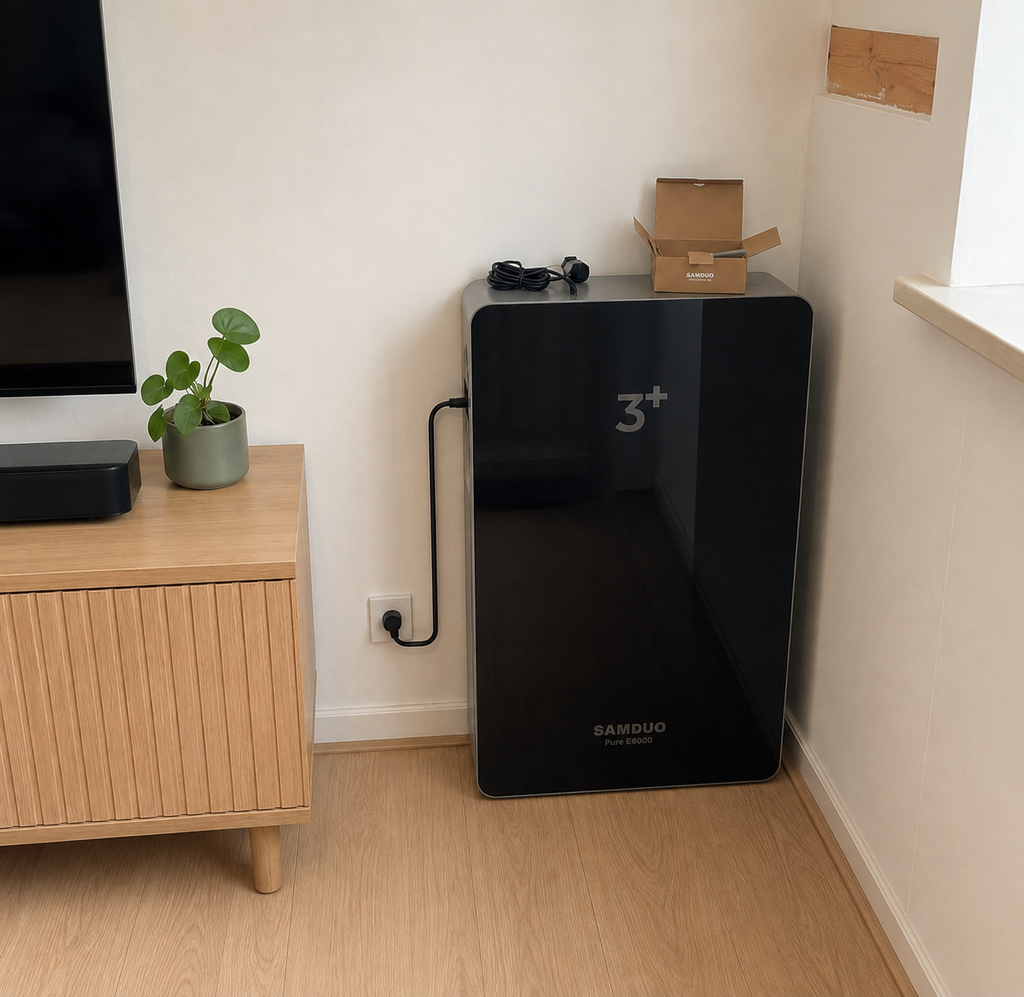
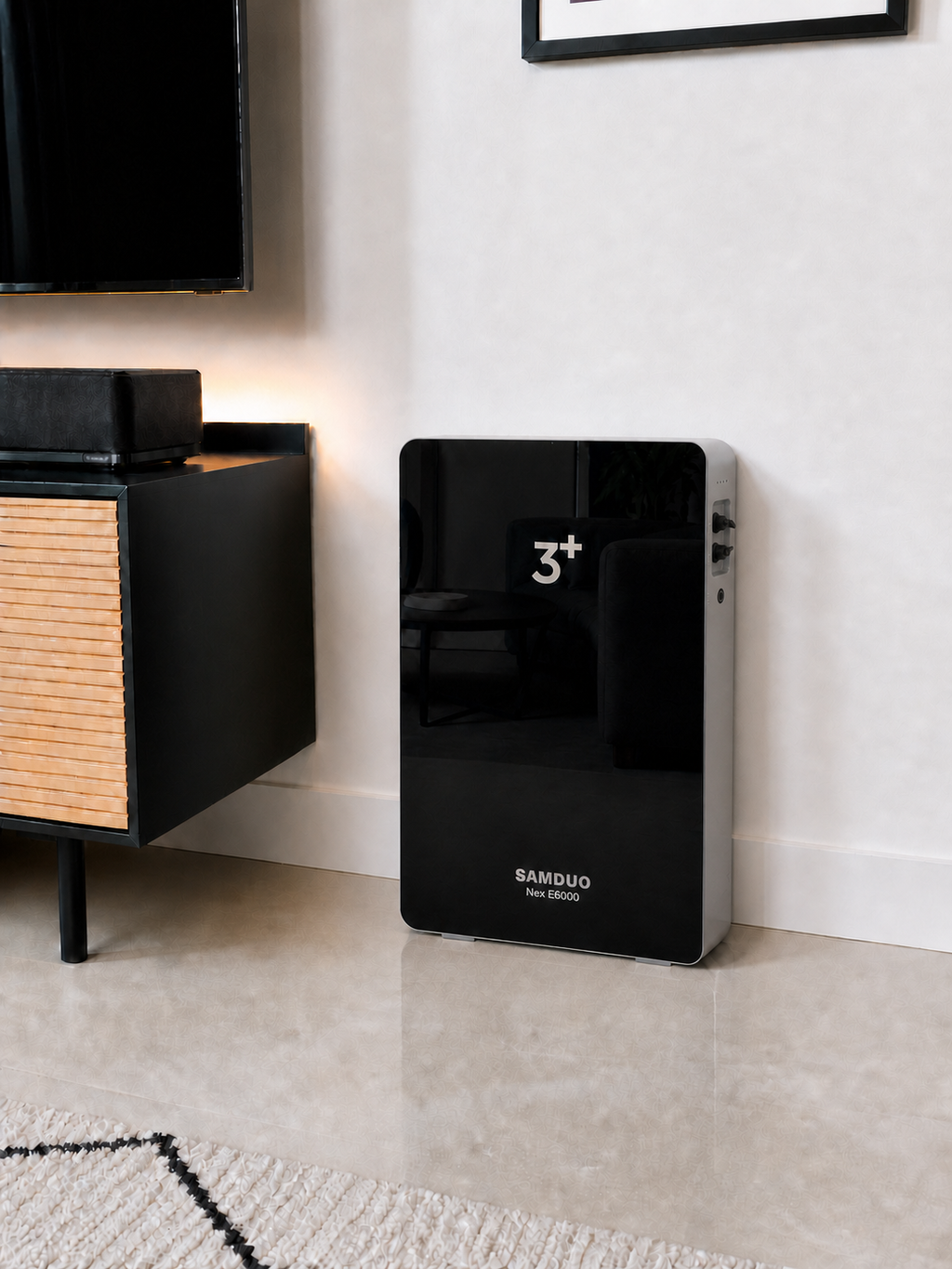
Installé dans notre salon depuis quelques semaines, le E6000 se fait presque oublier. Il prend peu de place, fonctionne silencieusement et s’intègre très bien avec notre intérieur.
We wonen in een appartement en hebben niet bijzonder veel ruimte voor extra apparatuur. Daarom spreekt het slanke ontwerp van de E6000 ons erg aan. Dankzij de geringe diepte kan hij discreet binnenshuis worden geplaatst en neemt hij verrassend weinig ruimte in. In combinatie met onze kleine zonnepaneleninstallatie kunnen we de overdag opgewekte energie opslaan en deze later op de avond gebruiken.
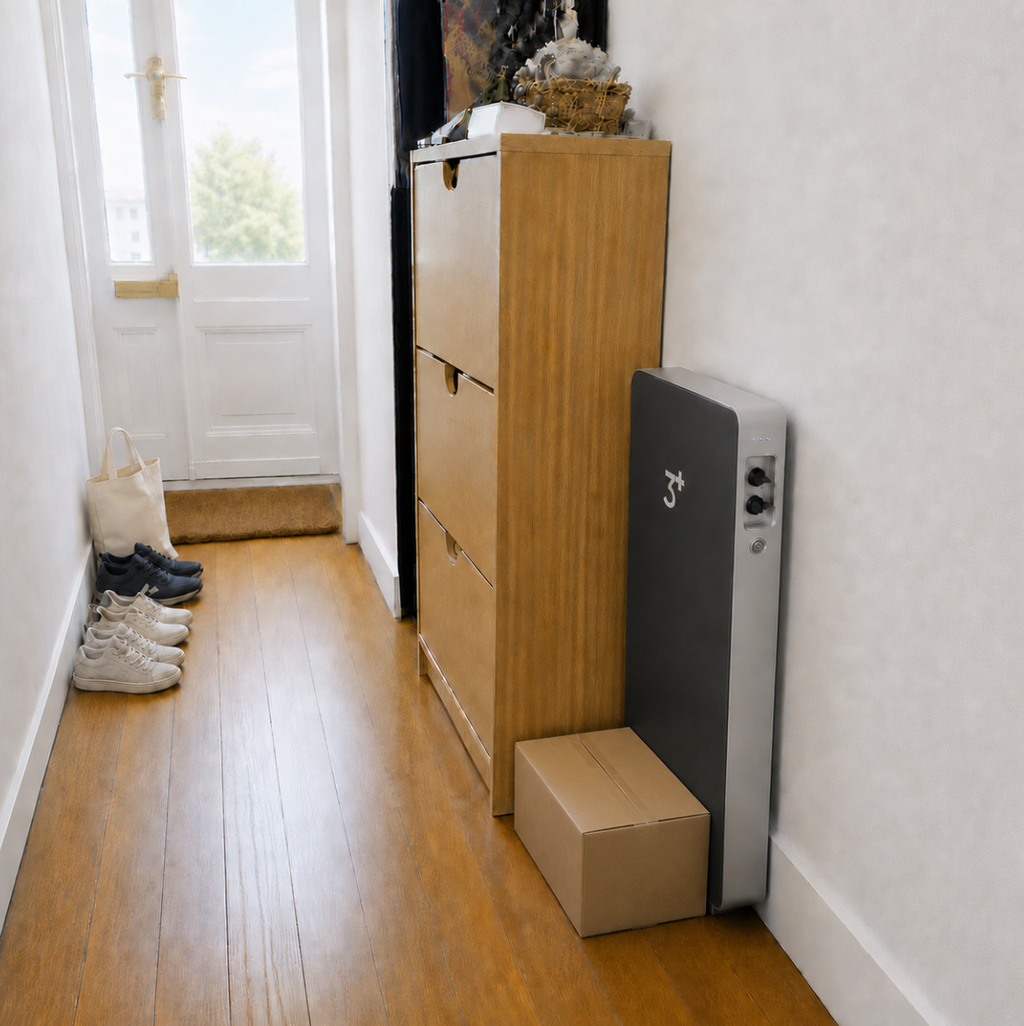
Le E6000 prend moins de place que je ne l’imaginais. Je l’ai installé dans un petit espace de rangement et il s’intègre très bien. L’installation a été vraiment simple grâce au système plug-and-play, il suffit de le brancher et c’est prêt à fonctionner. Au quotidien, l’utilisation est aussi très facile.
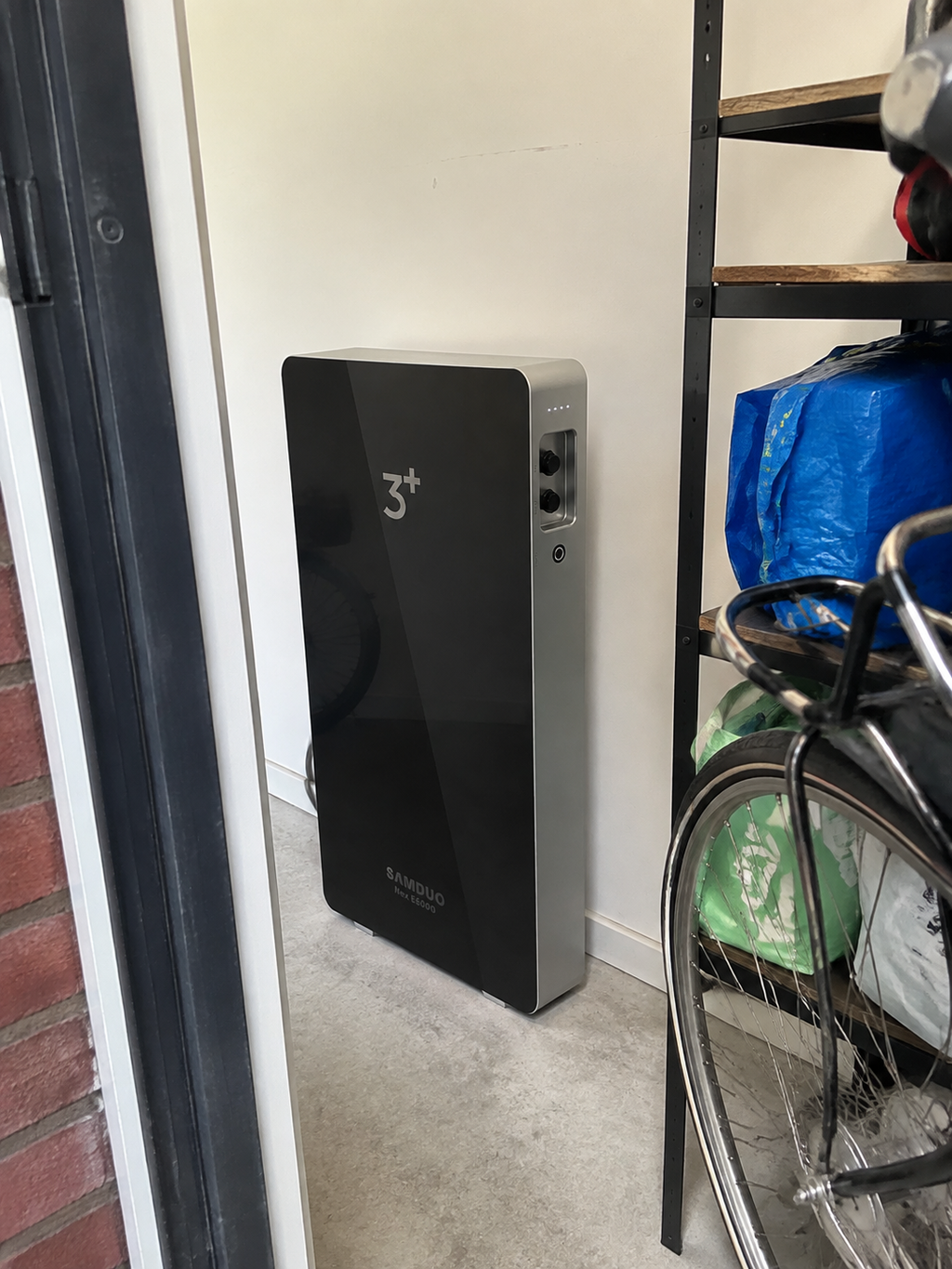
Bei uns ist nicht besonders viel Platz, deshalb war die geringe Tiefe des E6000 ein wichtiger Kaufgrund. Mit knapp 12 cm ist er wirklich erstaunlich schlank und lässt sich viel unauffälliger unterbringen, als ich erwartet hatte. Für rund 6 kWh Speicher finde ich das Design wirklich gelungen.
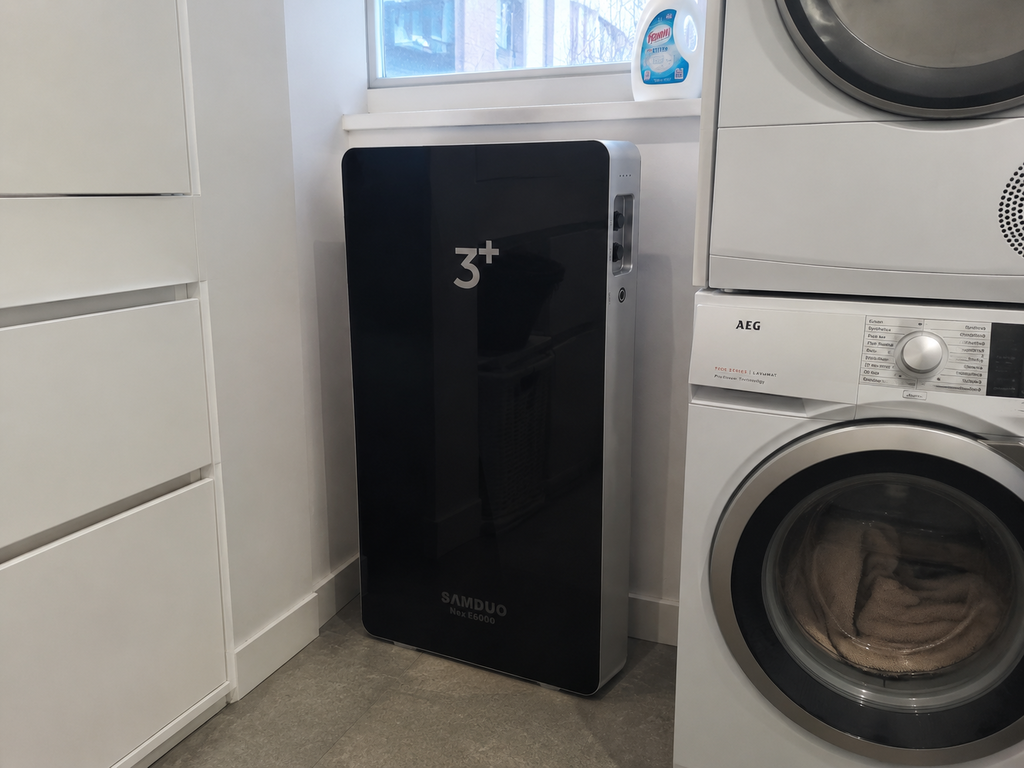
Wat mij vooral overtuigde, is hoe weinig ruimte de E6000 inneemt. Bij ons staat hij in de hoek van de woonkamer en door de geringe diepte blijft er genoeg ruimte over. Voor een thuisbatterij van ongeveer 6 kWh had ik eerlijk gezegd iets veel groters verwacht. Vooraf maakte ik me ook een beetje zorgen over het geluid, maar in de praktijk valt dat erg mee en tijdens normaal gebruik merken we er eigenlijk nauwelijks iets van. Zeker in een kleinere woning ben ik heel tevreden over hoe compact de E6000 is en hoe stil hij in het dagelijks gebruik blijft.